Simple Line Art Kite Drawing: A Designer's Review
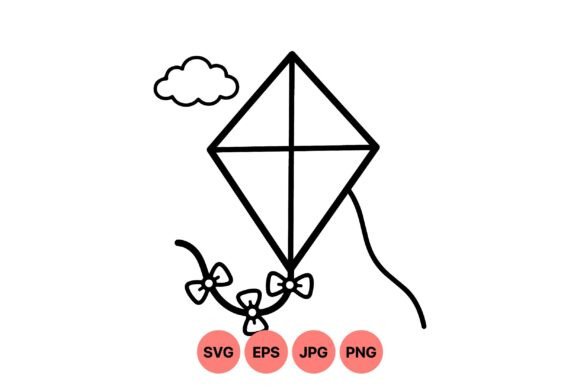
When I first opened the Simple Line Art Kite Drawing, I immediately felt a sense of lightness. The minimal black line vector shows a diamond-shaped kite with small bows trailing down its tail and a single cloud tucked into the corner of the sky. It is the kind of illustration that feels nostalgic without being dated, playful without being loud. For an embroidery designer, this is a sweet spot. The mood is airy, calm, and gently cheerful. It whispers childhood spring afternoons rather than shouting them. That restraint is exactly what makes it usable across so many real projects, from a baby onesie to a boutique tote bag.
The shape itself is simple and clean. The kite holds a classic diamond silhouette, and the bow details on the tail add just enough personality to keep the eye moving downward. The small cloud balances the composition nicely. There is no clutter, no unnecessary flourishes. As someone who has digitized and stitched hundreds of line art designs, I can tell you that this kind of restrained drawing usually translates beautifully into thread. The Simple Line Art Kite Drawing has the bones of a design that will read clearly even at smaller sizes, which is not something I can say about every minimal vector I come across.
First Impressions Meet Embroidery Reality
Let me ground this in a real scenario. I was recently preparing a small batch of personalized tote bags for a spring market. The client wanted something light, outdoor-themed, and suitable for children but not babyish. I tested several designs before settling on this kite graphic. The Simple Line Art Kite Drawing stood out because it did not try too hard. On a natural cotton tote, stitched in a soft charcoal thread, it looked like a hand-drawn sketch come to life. The satin stitch on the kite body held its shape well, and the running stitch on the tail and bows gave a delicate, airy feel that matched the original vector intent perfectly.
What I appreciate most is how the design breathes. There is enough open space inside the kite shape that the fabric itself becomes part of the artwork. This is crucial for embroidery because overly dense fill stitch on a simple shape can make the final product feel stiff and heavy. With the Simple Line Art Kite Drawing, you can keep the stitch count low and let the fabric texture do some of the visual work. That means softer finished pieces, faster stitch times, and happier customers who do not feel like they are wearing a plastic patch on their chest.
Where This Design Truly Belongs
I have been doing this long enough to know that not every graphic belongs on every product. A design needs to match the product's purpose, the customer's expectations, and the fabric's behavior. The Simple Line Art Kite Drawing has a clear home in several categories that matter to small business owners and crafters.
Children's apparel is the most obvious fit. A small version of this kite stitched on a baby romper or a toddler t-shirt feels organic and gentle. It does not scream cartoon or licensed character. It simply looks like a thoughtful, artistic choice. Parents notice that difference. I have seen it on baby blankets too, where the single cloud and kite motif create a quiet nursery accent that pairs well with soft pastel thread colors.
Outdoor and adventure-themed products also benefit from this design. Think picnic blankets, camp hats, lightweight windbreakers, and canvas daypacks. The kite carries a universal outdoor feeling without being tied to a specific season or activity. That versatility is valuable when you are building a product line that needs to sell across spring, summer, and early fall.
For Etsy sellers and craft fair vendors, this design works beautifully on kitchen towels, pillow covers, and simple cotton aprons. The minimal style means it does not compete with other patterns or colors in a room. It accents rather than dominates. I have also seen it used effectively on personalized gift items, such as a monogrammed tote bag where the kite sits above the initials. The result feels custom, polished, and genuinely giftable.
Stitching Performance and Practical Considerations
Now, let us talk about how the Simple Line Art Kite Drawing actually performs under the needle. The diamond shape is straightforward to hoop and digitize. There are no sharp internal corners that cause thread breaks, no tiny isolated elements that risk disappearing on textured fabric. The tail bows are the most detailed part, and even those are spaced well enough that you can use a simple running stitch without losing definition.
However, I do have a few practical notes. On very small hoop sizes, under three inches, the cloud element can become a bit tight. If you are planning to stitch this on a baby sock or a narrow hat brim, consider scaling the cloud up slightly or removing it and relying on the kite alone. The design still reads perfectly without it. Another thing to watch is the line weight. The original vector is thin and delicate. When you digitize it, you will need to decide whether to preserve that thin line or beef it up slightly for better visibility on dark fabrics. I recommend testing both versions on scrap material before committing to a production run.
Stabilizer choice matters here. Since the design is light and open, you do not need heavy cutaway stabilizer on woven fabrics. A quality tear-away works fine for most cotton applications. On stretchy fabrics like jersey or knit baby clothes, use a fusible cutaway to prevent distortion. The open lines of the kite will show any pulling or puckering immediately, so take the time to get your hooping tight and your stabilizer right.
Fabrics That Love This Design, and Ones That Do Not
The Simple Line Art Kite Drawing thrives on smooth, medium-weight natural fabrics. Cotton canvas, linen blends, twill, and quality quilting cotton all provide a beautiful base for the clean lines to shine. The fabric's natural texture adds warmth to the minimal style, making the finished product feel handmade in the best way.
On the flip side, I would approach highly textured fabrics with caution. Terry cloth, thick fleece, and heavily napped materials can swallow the fine lines. The tail bows especially can lose their shape if the fabric pile is too deep. If you must stitch on fleece, consider using a water-soluble topping to hold the surface flat and increase the stitch width slightly. I have also found that very thin, slippery fabrics like silk or lightweight rayon can be tricky because the design's open structure does not provide much anchoring. A heavier stabilizer helps, but the result may still feel less stable than you would like.
Dark fabrics present another consideration. A black thread on a black sweatshirt will make the kite nearly invisible. The beauty of this design is its simplicity, but that simplicity depends on contrast. On dark backgrounds, use a lighter thread color, perhaps a soft white, cream, or pale blue, to keep the illustration readable. Test your thread choice by holding a stitched sample at arm's length. If the kite disappears, so will your customer's satisfaction.
Product Value and Customer Perception
One thing I have learned over the years is that customers buy feelings, not just products. The Simple Line Art Kite Drawing creates a feeling of calm, nostalgia, and gentle joy. When someone sees this design on a handmade item, they do not think about stitch count or stabilizer. They think about flying a kite with their child, or a breezy afternoon at the park, or a quiet moment of childhood wonder. That emotional connection is what turns a simple tote bag into a meaningful gift.
For small business owners, this is a design that helps build brand consistency. The minimal style looks intentional and curated. It pairs well with other line art designs, making it easy to create a cohesive product collection. A shop that sells embroidered kitchen towels, baby blankets, and tote bags can use this kite across multiple items without it feeling repetitive. Customers recognize the style and begin to associate it with your brand's aesthetic. That kind of visual consistency builds trust and repeat sales.
From a presentation standpoint, the Simple Line Art Kite Drawing photographs beautifully. The clean lines pop against neutral backgrounds, and the design looks as good in a flat lay as it does on a model. If you sell online, good product photography is everything. A design that photographs well saves you time and makes your listings look more professional. I have used this kite on mockups for printable products and digital embroidery previews, and it consistently looks crisp and appealing.
Commercial Use and Licensing Awareness
Before you stitch this design onto anything you plan to sell, pause and check your licensing. The product description notes that the download includes a ZIP folder, but it does not specify the exact license terms. I always advise makers to confirm whether the file is cleared for commercial embroidery use, especially if you are selling finished items on Etsy, at craft fairs, or through your own website. Some graphics are sold for personal use only or require an extended license for physical product sales. The Simple Line Art Kite Drawing comes from the Illustrations category under Graphics, which typically means it is a design asset. That often implies broader usage rights, but do not assume. Verify before you stitch for profit.
If you are using this design as part of a larger embroidery project, such as combining it with text or other elements, make sure the license allows derivative works. Many printable mockup sellers and digital product creators rely on assets like this to build their own unique offerings. Knowing your license boundaries protects your business and respects the original artist's work.
Practical Designer Notes for a Smooth Workflow
Every embroidery file I test goes through a short checklist before it hits a customer's order. For the Simple Line Art Kite Drawing, here is what I recommend. First, always test on scrap fabric that matches your final product. A stitch-out on cotton canvas will look different from one on a baby onesie. Check your thread color contrast under natural light, not just under your sewing machine lamp. Review the stitch density and adjust if the lines feel too thick or too thin for your taste. Confirm your hoop size allows enough clearance around the design edges, especially if you plan to add text or combine with other elements.
Inspect the small details after stitching. The bows on the tail should be distinct and not blur together. The cloud should read as a cloud, not a random blob. If either element loses clarity, adjust your digitizing settings or slightly increase the element size. I also test designs in black and white mockups to see how the silhouette holds up without color. The Simple Line Art Kite Drawing passes that test easily because its shape is strong and recognizable.
Finally, think about the end user. Will this design hold up to washing? On a tote bag, a few gentle cycles should not cause issues if you used proper stabilizer and secure stitching. On a baby item that gets washed frequently, consider adding a soft backing to protect sensitive skin and keep the stitches from irritating the wearer. Little details like that separate a professional product from a hobbyist experiment.
Who Should Use This Design
If you are an embroidery designer, a small shop owner, a crafter building inventory for a market, or a creative entrepreneur looking for a versatile, crowd-pleasing motif, the Simple Line Art Kite Drawing deserves a spot in your digital library. It is not flashy. It is not trendy in a way that will feel dated next season. It is simply a well-drawn, thoughtfully composed piece of line art that translates beautifully into stitched form. That kind of quiet reliability is worth more than a hundred overcomplicated designs that look great on screen but fail under the needle.
I have used it on children's clothing, tote bags, nursery decor, and personalized gifts. Each time, the reaction from customers has been positive. They notice the delicacy of the lines, the sweetness of the little bows, the way the single cloud balances the whole scene. They do not say, "Nice stitch density." They say, "This is so cute," or "I love this," or "It reminds me of my childhood." And honestly, that is the whole point. The Simple Line Art Kite Drawing is a small design that delivers a big emotional payoff, and you cannot ask for much more than that in a commercial embroidery asset.