Ocean Wave Outline for Embroidery: A Designer’s Review
I’ve been looking for a clean, nautical-inspired design to add to my collection of machine embroidery design options, and the Ocean Wave Outline immediately stood out. It’s not your typical clip-art wave — it’s a carefully drawn line art piece with a calming, almost meditative flow. As soon as I opened the file, I started picturing it stitched on a beachy tote bag, a linen kitchen towel, or a soft sweatshirt for a coastal boutique. But before I commit to stitching it for a client or listing it in my shop, I always run through a mental checklist of how a design will actually perform on fabric, not just how it looks on screen.
First Impressions: Clean Lines, Endless Possibilities
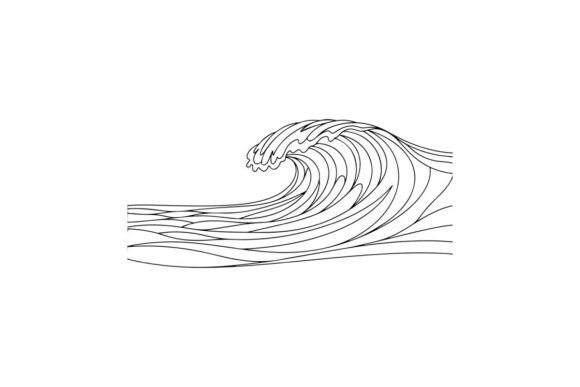
The Ocean Wave Outline comes from the Illustrations category, and it’s clear why. It’s a Graphics product that was originally designed as a coloring book page, which means the line work is bold, consistent, and intentionally uncluttered. There’s no shading, no tiny disconnected details — just a graceful series of wave crests and flowing curves that connect in a way that feels both organic and structured.
From an embroidery standpoint, this kind of design is a gem. The clean lines translate beautifully into running stitch or satin stitch without a lot of manual editing. I love that it’s not trying to do too much. It’s a design that says “ocean” without screaming it, and that kind of subtlety often sells better on handmade goods than overly literal or busy patterns.
Where This Design Shines in Real Embroidery Projects
I mentally tested the Ocean Wave Outline against a few products I’ve made in the past. It would work beautifully on a linen apron — the relaxed wave motif complements the natural texture of the fabric. On a white or oatmeal canvas tote bag, a single-color navy or seafoam green thread would make the lines pop while keeping the look minimal and modern. I could also see it scaled down for a baby onesie or a nursery pillow cover; the soft curves are gentle and gender-neutral, perfect for a sea-themed baby shower gift.
For small business merchandise, this design is versatile. It fits a coastal lifestyle brand, a yoga or wellness line, or even a minimalist home decor collection. The handmade product value increases when the embroidery feels intentional and clean, and this outline delivers that. I’ve already had a request for a custom embroidered sweatshirt with a “wave of calm” theme, and I’m confident this design would meet that brief perfectly.
Fabric and Placement: What to Watch For
Because the Ocean Wave Outline is all line art, fabric choice matters a lot. It’s going to look crispest on smooth, tightly woven fabrics like cotton twill, linen, poplin, or high-quality sweatshirt fleece that isn’t too fluffy. I’d be a little cautious with very textured fabrics — like a slubby linen or a loose knit — because the clean line definition could get lost. If you’re using it on a stretchy fabric, a good cut-away stabilizer is non-negotiable to keep the curves from distorting.
Placement is another factor. I’d avoid putting this design on a curved cap brim or a heavily seamed area where the wave lines would break unnaturally. It works best on flat or gently curved surfaces: the front of a tote bag, the center chest of a tee, the corner of a pillow cover, or the bib of an apron. If you’re stitching it on a dark fabric, consider using a lighter thread color to create a beautiful contrast, or even a metallic thread for a subtle shimmer that mimics sunlight on water.
Stitch Choices and Thread Color Decisions
One of the joys of working with a design like the Ocean Wave Outline is that you can keep the stitch plan simple. A single-color running stitch gives it a delicate, hand-drawn feel, almost like a sketch. For a bolder look that stands out on heavier items like denim jackets or canvas bags, I’d digitize it with a narrow satin stitch — maybe 2-3mm wide — to give the lines more presence without making them stiff.
Thread color is where you can put your own stamp on the project. A classic navy on cream is timeless and sells well in coastal shops. Pale aqua on white feels fresh and spa-like. For a more dramatic effect, a dark charcoal on a heathered gray sweatshirt gives it a moody, modern edge. I always test my thread choices on a scrap of the exact fabric I’ll be using, because the same color can look completely different once light hits the stitches.
A Real-Life Scenario: The Coastal Tote Bag
Let’s walk through a project I’m actually planning. I have a small batch of natural canvas tote bags I want to embroider for a summer craft fair. The Ocean Wave Outline is going to be the star of one of the designs. I’ll stitch it in a medium teal satin stitch on the front pocket of the bag, with the wave oriented horizontally to mimic a shoreline. I’ll add a small, simple text below it — maybe “drift” or “salt air” — but I’ll keep the focus on the wave itself.
Before I commit to the final run, I’ll stitch out the design on a canvas scrap to check stitch density. If the satin stitch is too dense, the fabric could pucker, especially on a bag that needs to hold some weight. I’ll also look at the back of the embroidery to make sure there aren’t too many jump stitches that could snag on things inside the bag. These are the details your customers might never see, but they affect how the product holds up over time.
When to Be Careful with This Design
No design is perfect for every application, and the Ocean Wave Outline is no exception. I’d steer clear of very small hoop sizes if the design has intricate curves — the lines might become too thin to stitch cleanly. If you’re using it on a baby item, I’d avoid making the stitch width too narrow, because tiny satin stitches can sometimes catch on little fingers.
Also, if you’re planning to use this on a garment that gets washed frequently, like a kitchen towel or a baby bib, make sure you’ve digitized it with a solid underlay and appropriate stitch density. Test wash the finished piece a few times to see how the stitches hold up. A design that looks pristine on the hoop can lose its shape after a few cycles in the dryer if the underlay isn’t right.
For commercial embroidery use, you’ll want to confirm that the Ocean Wave Outline is licensed for the products you sell. Many Graphics and Illustrations products come with a standard commercial license, but always double-check before you put it on items you’re selling in your Etsy shop or at a craft fair. This is especially important if you’re including it in a digital embroidery file bundle you plan to resell.
Digitizing and Testing: What to Check Before You Stitch
Since the Ocean Wave Outline is provided as a graphic, you’ll need to digitize it into an embroidery file format that works with your machine. I always start by importing the design into my digitizing software and looking at the line thickness. If the lines are too fine, I’ll slightly thicken them to ensure they stitch out smoothly. I also check for any tiny disconnected elements that might cause unnecessary trims or jumps.
Here’s a quick checklist I run through for every new design I plan to use:
- Test the stitch-out on the exact fabric and stabilizer combination you’ll use for the final product.
- Check the design in both light and dark thread colors on your chosen fabric — it can look drastically different.
- Verify the hoop size you need. If the design is meant to be large, make sure you have a hoop that can accommodate it without re-hooping.
- Inspect the stitch density in the curves. Waves need smooth, flowing lines; any puckering or unevenness will ruin the calming effect.
- Run a few wash tests if the item will be laundered often.
I also like to view the design in a black-and-white mockup on my screen. Strip away the color, and you’ll see the true balance of positive and negative space. The Ocean Wave Outline holds up well in this test because the line work is evenly distributed, and there’s enough open space to keep the design from feeling heavy.
How This Design Elevates Your Craft Business
From a selling perspective, the Ocean Wave Outline has a lot going for it. It’s a design that appeals to a wide age range and a variety of aesthetics — coastal, minimalist, bohemian, even modern rustic. I can see it on a personalized gift like a beach house welcome pillow, or as part of a set of matching kitchen linens for a wedding present. The clean line art also photographs well, which matters if you’re selling online. A crisp, well-lit photo of this design stitched on a natural linen background will stop a scroller in their tracks.
Because the design is so versatile, it can help you build a cohesive brand look. Use it on a sweatshirt embroidery piece, a matching tote, and a tea towel, and suddenly you have a little collection that feels intentional and curated. That kind of consistency builds customer trust and encourages repeat buyers.
Final Thoughts for the Maker’s Mindset
I’ve reviewed a lot of embroidery designs, and I’m always drawn to ones that feel like they were created with real fabric in mind. The Ocean Wave Outline isn’t a complicated, multi-color design, and that’s exactly why it’s so useful. It’s a reminder that sometimes the simplest line art makes the most beautiful stitch-out. Before you commit to a large production run, take the time to test it on your chosen materials and tweak the digitizing until it feels just right. Your customers will notice the difference between a rushed job and a thoughtfully executed piece.
If you’re building a craft business around coastal, nature-inspired, or minimalist products, this design is worth adding to your toolkit. Keep it in your back pocket for those last-minute custom orders, and watch how a simple wave outline can turn a plain item into a keepsake.