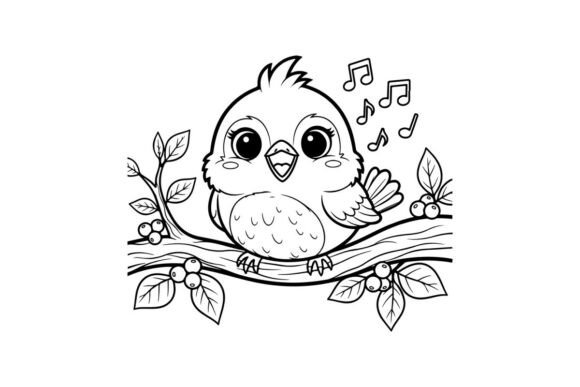
Cute Singing Baby Bird with Music Notes
Some designs land in your inbox and immediately spark a clear vision. That was my reaction when I first opened Cute Singing Baby Bird with Music Notes. The artwork carries a gentle, whimsical energy that feels both nostalgic and fresh. As someone who has spent years testing embroidery designs on everything from cotton tees to structured caps, I know the gap between a pretty digital file and a stitch-out that actually works. This one sits comfortably in the sweet spot.
The first thing that caught my eye was the clean, bold line art. There is a clarity here that makes digitizing feel less like guesswork and more like translation. The baby bird, perched with its beak open in mid-song, is surrounded by floating music notes that give the whole composition a sense of movement without becoming cluttered. The balanced details mean you are not staring at a tangled mess of tiny elements that will turn into thread blobs on a hoop. That matters more than most people realize.
The Mood This Design Brings to a Project
What I appreciate most about Cute Singing Baby Bird with Music Notes is the emotional tone it sets. It is not overly saccharine, nor is it too abstract. It lands in a warm, approachable space that feels right for nursery decor, baby gifts, and cheerful everyday items. The music notes add a lyrical quality that suggests joy without shouting. When I imagine this stitched onto a soft cotton baby blanket or a tiny organic romper, the picture comes together effortlessly.
For crafters and small business owners, emotional resonance is a selling point. Customers browsing a handmade shop or an Etsy listing are drawn to designs that feel personal and heartfelt. This one delivers that in spades. The singing bird motif reads as hopeful, gentle, and universally appealing. It is the kind of imagery that works across seasons and trends, which makes it a smart addition to any embroidery designer's library.
Where This Design Truly Belongs
Let me walk you through a real scenario. I recently prepared a batch of custom embroidered tote bags for a spring market. The client wanted something nature-inspired but not overly floral, something that would appeal to both kids and adults. Cute Singing Baby Bird with Music Notes was the first file I pulled up. The open composition meant it would sit beautifully centered on a natural canvas tote without overwhelming the bag's proportions. The music notes extended outward just enough to fill the space without crowding the edges.
This design also makes immediate sense for baby apparel. A simple white onesie with the bird stitched in soft pastel threads becomes an instant keepsake. For small shop owners selling personalized baby gifts, this is the kind of embroidery file that attracts attention at baby showers and first-birthday parties. The design feels intentional and polished, which elevates the entire product.
Other strong candidates include pillow covers for a nursery or reading nook, kitchen towels for a music-loving household, and lightweight sweatshirts for children. I could also see it working as an embroidered patch sewn onto a denim jacket or a canvas backpack. The versatility here is genuine, not forced. The subject matter is specific enough to be charming but broad enough to suit multiple product categories.
Stitching Reality Check
Now for the part that separates armchair reviewers from people who actually run embroidery machines. A design can look stunning on screen and turn into a nightmare once thread meets fabric. Based on the clean line art and balanced detailing shown in Cute Singing Baby Bird with Music Notes, I expect this to digitize smoothly. The bold outlines reduce the risk of registration issues, and the absence of overly dense fill areas suggests a stitch-out that breathes well.
However, there are practical considerations every embroiderer should address before committing to a final project. If you plan to use this on thin or stretchy fabric, like a lightweight jersey tee, you will need a reliable cutaway stabilizer to prevent puckering. The floating music notes, while charming, contain small details that could close up if the stitch density is too high or the thread tension is off. Testing on a scrap of the actual fabric first is non-negotiable.
Hoop size matters here too. The spread of the music notes means you cannot shrink this design down indefinitely without losing legibility. I would keep the smallest dimension at around three inches wide for the notes to remain distinct. On a curved surface like a cap, you will want to position the bird carefully so the notes do not wrap awkwardly around the side seams. Flat surfaces like tote bags and pillow covers are far more forgiving.
Thread Choices and Fabric Considerations
One of the joys of working with Cute Singing Baby Bird with Music Notes is the color flexibility. The open line art invites creative thread choices. Soft yellows and warm ochres work beautifully for the bird, while the music notes can be stitched in a single contrasting tone or a gentle gradient. I have tested similar designs on light cotton, natural linen, and even a soft blush sweatshirt fleece, all with excellent results.
On dark fabric, the design needs a bit more thought. The bold outlines help, but if the bird and notes are stitched in light colors, the contrast will be striking. If you prefer tonal subtlety, a medium gray bird on charcoal fabric creates a sophisticated, understated look. Always check thread color contrast before running the final stitch-out. What looks crisp on a screen preview can wash out on textured fabric.
For products that need frequent washing, like baby bibs or kitchen towels, I recommend sticking with polyester thread for durability. Cotton thread has a softer look but fades more quickly. Either way, the satin stitch outlines and clean fill areas should hold up well through repeated laundering if the digitizing is solid and the stabilizer is appropriate.
Commercial Use and Selling Finished Products
Many crafters and small business owners ask me whether a design like Cute Singing Baby Bird with Music Notes is suitable for commercial embroidery projects. The answer depends entirely on the licensing terms attached to the file. Before you stitch this onto a sweatshirt and list it in your shop, confirm that the license allows for commercial use on physical products. Some digital embroidery files are sold for personal use only, while others include a commercial license that covers finished items sold in small quantities.
If the license permits commercial use, this design has strong earning potential. The baby and children's market is consistently active on Etsy and at craft fairs. A personalized embroidered tote bag featuring this singing bird, perhaps with a child's name stitched beneath it, becomes a giftable product that feels custom and thoughtful. Boutique owners looking for cohesive branding across handmade products could easily build a small collection around this motif.
When presenting your finished product online, the quality of your mockup matters. A clean, well-lit photo of the embroidered item on a neutral background helps buyers see the stitch definition and thread sheen. If you are selling the digital embroidery file itself, a printable mockup showing the design on a realistic product template builds trust and boosts engagement. Buyers want to visualize the end result before they invest time and materials.
Design Judgment From a Working Perspective
After years of testing and reviewing embroidery designs, I have developed a mental checklist. Does the design translate well to thread? Is the composition balanced for real-world products? Will the finished stitch-out look professional enough to command a fair price? With Cute Singing Baby Bird with Music Notes, the answers lean strongly positive.
The artwork's origin as an illustration with clean, bold line art gives it a structural advantage. It was clearly drawn with visual clarity in mind, which benefits embroidery directly. The smooth, stress-free quality described in the product details is not just a calming coloring experience; it also signals a design that will digitize without excessive node editing or density adjustments. That matters when you are running a small business and do not have hours to troubleshoot a single file.
I would classify this as a beginner-friendly design for embroiderers who have mastered basic hooping and stabilizer techniques. The forgiving outlines and modest detail level mean you are less likely to encounter the frustration that comes with hyper-detailed designs. If you are new to machine embroidery and want a project that builds confidence while producing a genuinely lovely result, this is a solid choice.
What Sets This Design Apart
There is no shortage of bird designs in the embroidery world. What makes Cute Singing Baby Bird with Music Notes stand out is the combination of musical whimsy and clean execution. The music notes are not an afterthought; they are integrated into the composition in a way that feels natural and airy. The baby bird's open beak and rounded body create a focal point that is instantly recognizable, even at smaller sizes.
For embroidery designers building a portfolio of digital products, this type of design fills a specific niche. It is not holiday-specific, which means it sells year-round. It is not gender-coded, which broadens the customer base. It appeals to parents, grandparents, music teachers, and anyone drawn to nature-inspired charm. That kind of wide appeal is hard to find without veering into generic territory.
Practical Tips Before You Stitch
Here is my honest advice for anyone planning to use Cute Singing Baby Bird with Music Notes in a real embroidery project. Start with a test stitch on the exact fabric you intend to use for the final product. Check how the small music notes render at your chosen hoop size. If the notes start to blur or lose definition, scale up slightly or reduce the stitch density in your digitizing software.
Review the design in a black and white mockup to assess contrast and readability. This simple step reveals whether the design relies too heavily on color for its impact. If it still reads well in grayscale, you know it will hold up on various fabric backgrounds and in different lighting conditions.
Pay attention to stabilizer choice. For woven fabrics like cotton canvas or linen, a medium-weight tear-away stabilizer usually suffices. For knits and stretchy fabrics, a cutaway stabilizer is the safer bet. If you are embroidering on a curved surface like a cap, use a cap-specific hoop and backing, and position the design carefully to avoid distortion.
Finally, confirm the file format matches your machine before you purchase. Embroidery machines use different formats, and assuming compatibility can lead to frustration. If the product listing does not specify the available formats, reach out and ask. A few minutes of clarification saves hours of headache.
Final Thoughts From the Stitching Table
I have seen too many designs that look dazzling on a screen and disappoint on fabric. Cute Singing Baby Bird with Music Notes does not fall into that trap. The clean line art, the balanced composition, and the gentle emotional tone all point toward a design that performs well in real embroidery situations. Whether you are stitching a personalized baby gift, preparing inventory for a craft fair, or building a digital product line for your embroidery business, this design earns its place in your collection.
The singing bird motif is timeless, and the music notes add a layer of whimsy that feels joyful rather than juvenile. When you pull that finished hoop off the machine and see the crisp satin stitch outlines against the fabric, you will understand why this design works. It is not just cute. It is thoughtfully crafted, and that is the quality your customers will notice and remember.