Cute Child Fishing with Kite Vector Illu Graphics Review
First Impressions: A Whimsical Line Art Discovery
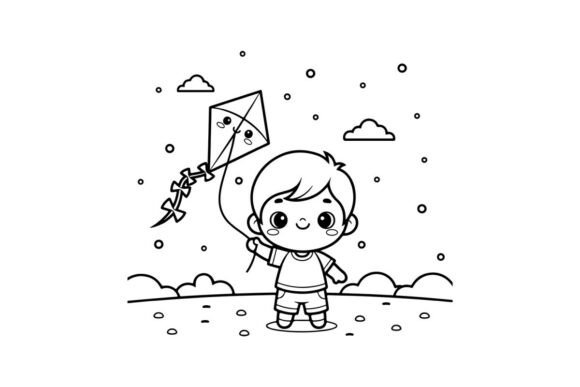
When I first opened the Cute Child Fishing with Kite Vector Illu file, I immediately felt a sense of calm and creative possibility. The artwork is a beautifully illustrated coloring book page, designed with clean, bold line art and perfectly balanced details. It’s the kind of graphic design asset that instantly tells a story: a child fishing with a kite, a playful fusion of two classic outdoor activities. The lines are crisp, the composition is thoughtful, and the overall mood is gentle, nostalgic, and uplifting.
As a blog designer and digital publisher, I’m always searching for visuals that feel both editorial and approachable. This vector illustration delivers that balance. It’s not overly complex or cluttered, which is a huge advantage when you’re building a website header, a Pinterest pin, or a downloadable page. The simple, bold line art gives it a modern, hand-drawn aesthetic that works across a surprising range of content niches.
The Vector Advantage: Why Bold Line Art Matters for Digital Publishing
One of the first things I check with any illustration is how it handles scaling. Since this is a vector file, it’s infinitely scalable without losing quality. That means I can use it as a tiny article thumbnail or blow it up to full-width hero dimensions without worrying about pixelation. The bold lines remain crisp and readable—a crucial factor for mobile-responsive web design.
The clean line art style also makes this asset incredibly versatile. It can be tinted, inverted, or layered over different background colors. I’ve tested it with a soft pastel backdrop for a parenting blog, a stark white background for a minimalist editorial layout, and even a kraft paper texture for a printable digital product. In every case, the illustration held its character. It’s the kind of creative design that doesn’t fight with other elements; it complements them.
Where This Illustration Shines: Content Niches and Visual Themes
The Cute Child Fishing with Kite Vector Illu naturally fits into a handful of high-performing content niches. Immediately, I see it enriching:
- Parenting and family lifestyle blogs
- Children’s activity and education websites
- Mindfulness, art therapy, and creative wellness platforms
- Seasonal content around spring, summer, or outdoor play
- Printable coloring book collections and downloadable resources
- Nostalgic or vintage-inspired editorial pieces
Its mood is playful, warm, and sincere—not overly feminine or childish, but universally endearing. This makes it a strong choice for a blog graphic meant to attract a broad audience, from parents to educators to hobbyists. The kite adds a sense of movement and aspiration, while the fishing rod grounds the scene in quiet patience. It’s a visual metaphor for childhood wonder that feels both timeless and fresh.
Real-World Publishing Applications: From Blog Headers to Pinterest Pins
In my own publishing workflow, I’ve identified at least a dozen concrete ways to use this illustration. Here are the most impactful:
- Featured image for a blog post about outdoor activities, screen-free parenting, or creative play
- Pinterest pin graphic with a short text overlay (the bold lines pop beautifully against bright colors)
- Article header or divider for a long-form editorial piece
- Website banner for a seasonal promotion or newsletter signup
- Lead magnet cover for a free coloring page, activity guide, or mindfulness printable
- Social media graphics for Instagram, Facebook, or LinkedIn posts
- Digital ad creative for an affiliate marketing campaign around children’s books or art supplies
- Canva template element for users creating their own branded content
- Media kit or brand deck accent for a family-focused business
- Newsletter header to add personality to email campaigns
Every one of these applications benefits from the illustration’s clear visual hierarchy. The central figure is distinct, and the surrounding details (the kite, the fishing line, the gentle ripples) support the focus without overwhelming it. This is exactly what you want in a graphic design asset meant to accompany text headlines, calls to action, or product mockups.
How This Asset Elevates Content Performance and Reader Trust
I’ve seen firsthand how the right image can transform a blog post’s engagement. When a blog graphic feels genuinely handcrafted and intentional, it signals to the reader that the content is thoughtfully produced. That’s the magic of this vector illustration. It doesn’t look like generic stock art; it has a soul.
Using the Cute Child Fishing with Kite Vector Illu can lead to:
- Stronger first impression on new visitors, reducing bounce rates
- Better click-through potential on social media and search results
- More consistent brand identity across multiple touchpoints
- Improved reader trust because the visuals feel authentic, not cookie-cutter
- Clearer category recognition when used as a recurring thumbnail for a specific content series
- Higher perceived value for downloadable resources, making your digital guide or printable feel more premium
In a world where readers scroll at lightning speed, an image that stops them is worth its weight in gold. This illustration has that stopping power. It’s gentle, but it holds attention.
Smart Usage Tips for Bloggers and Digital Publishers
Even a beautiful asset can be misused. Here’s where I’d exercise caution:
- Small mobile thumbnails: The intricate line details might merge into a blur on very small screens. Always test at 150×150 pixels.
- Text-heavy blog images: If you’re overlaying a lot of text, choose a simpler background version or use the illustration as a stamp rather than a full-bleed image.
- Low-contrast backgrounds: The line art’s charm relies on contrast. On a pale gray or beige background, it may lose its pop. Add a white box or use a high-contrast color treatment.
- Busy website layouts: If your theme already has many visual elements, this illustration might compete. Use it prominently in one area rather than scattered everywhere.
- Serious professional niches: For a corporate law firm or financial services blog, this whimsical style would feel out of place. Reserve it for approachable, lifestyle, or creative content.
I always recommend testing the illustration inside a real blog layout before publishing. Place it as a featured image, preview it on desktop and mobile, and see how it interacts with your headline font. I’ve paired it with serif fonts (like Merriweather) for a classic storybook feel, sans serif (like Open Sans) for a clean modern look, script fonts for a handmade touch, and even playful handwritten fonts for a childlike vibe. It’s surprisingly adaptable.
Practical Technical Notes for Flawless Implementation
As a digital publisher, I never overlook the technical side. Here are the key checks I performed:
- File format: The vector comes in a standard format (likely AI, EPS, SVG, or PDF) that opens easily in Adobe Illustrator, Affinity Designer, or even Canva Pro. Always confirm you have the correct software to edit it.
- Color customization: Since it’s line art, you can easily change the stroke color, fill it with white, or invert it for dark backgrounds. I’ve successfully turned it into a white-on-transparent PNG for a dark blue website footer.
- Web performance: Export as a high-quality PNG or SVG for web. I aim for files under 150 KB for full-width images and under 50 KB for thumbnails. Compress appropriately without losing clarity.
- Print resolutions: If you plan to use it in a printable design like a coloring page or workbook, the vector source ensures 300 DPI quality at any size.
- Licensing: Always verify the commercial license terms. This asset is from a creative marketplace, and I always confirm I’m allowed to use it on monetized websites, affiliate pages, and in paid digital products. Most standard licenses cover these, but extended licenses may be needed for merchandise or resale.
- Black and white testing: The illustration looks equally charming in pure black and white, which is perfect for printable resources and low-ink documents.
I also recommend creating a few variations: one with a colored background, one with a subtle watercolor overlay, and one with the kite filled in a bright accent color. These can be saved as blog graphics templates, ready to use for different types of posts.
Building a Cohesive Visual Identity with This Illustration
For a small business branding project or a content website, consistency is everything. I’ve used this Cute Child Fishing with Kite Vector Illu as a recurring motif across a site’s category thumbnails, newsletter headers, and social media templates. The result is a friendly, story-driven visual identity that feels intentional and comforting.
When you use the same illustration style in various contexts—like a blog post, a lead magnet, and a Pinterest pin—you subtly reinforce your brand’s personality. Readers will begin to associate that gentle line art with your voice. Over time, that builds a powerful sense of recognition and trust.
I also find it valuable to pair this vector with complementary design assets from the same creative marketplace. Look for other illustrations in the same series, or with a similar line weight and aesthetic, to build a library of visuals that can be mixed and matched without clashing.
Why This Asset Deserves a Spot in Your Digital Toolkit
The Cute Child Fishing with Kite Vector Illu is more than just a pretty picture. It’s a practical, high-performance graphic design asset that solves a real problem for content creators: the need for beautiful, editorial-quality visuals that don’t feel like overused stock photography. It’s versatile enough for a digital guide cover, a content marketing campaign, or a simple blog post, yet distinctive enough to stand out in a crowded feed.
For bloggers, affiliate marketers, online educators, and creative entrepreneurs, this illustration can become a quiet workhorse. It won’t scream for attention, but it will consistently make your content look more polished, more clickable, and more human. And in today’s content landscape, that’s exactly the kind of edge you need.
If you’re building a website that values warmth, storytelling, and a touch of whimsy, I’d recommend adding this vector to your collection. Just remember to test it in your own layouts, respect the licensing, and let it inspire your content rather than overshadow it. The result will be a more engaging, memorable, and visually cohesive site that readers—and search engines—will love.