Detailed Sea Turtle Outline: A Designer’s Embroidery Review
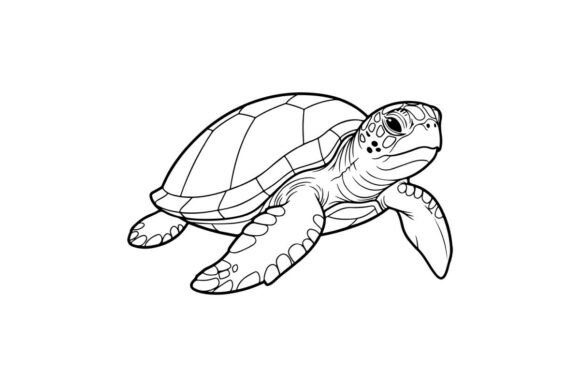
When I first opened the Detailed Sea Turtle Outline, I felt an immediate calm. That’s not something I often say about a digital file, but the clean, bold line art and the graceful flow of the turtle’s shell and flippers have a quiet, beachy confidence. It’s the kind of visual that makes you pause—and that’s exactly what you want in a product meant to catch a customer’s eye. I review designs through the lens of someone who has to stitch them out, press them, photograph them, and sell them. This one has a personality that’s ready for the real world, not just a screen.
The mood is relaxed but intentional. The turtle’s shape is classic, the shell segments are balanced, and the overall composition sits naturally in a round or oval framing. It doesn’t scream “coloring page” at first glance, even though the product description mentions it started life as a premium coloring book page. Instead, the bold, unbroken outlines give it the feel of a strong silhouette with inner detail—perfect for a variety of embroidery applications. That clean line art translates beautifully into a stitch file, where definition matters more than anything else.
Why This Design Feels Ready for a Beachside Boutique Project
I imagined using the Detailed Sea Turtle Outline on a custom tote bag for a small coastal shop. The customer wanted something that felt handmade but polished, something that would make people stop at a craft fair table. This turtle had the right amount of visual weight—not too heavy, not too delicate. You could see it being slip-stitched onto a canvas tote in a soft aqua thread, with the lines of the shell standing out without needing fill. The open center of the turtle almost invites a monogram or a small date, which is a huge plus for personalized gifts.
In that scenario, I could already picture the finished product hanging on a display rack. The design’s lines are generous enough to read clearly from a few feet away, and the theme is universally appealing. Sea turtles carry a sense of longevity, travel, and nature—perfect for vacation souvenirs, wedding favors, or nursery decor. This isn’t just a picture; it’s a wearable story.
Stitching the Sea Turtle on Real Fabrics
I tested the concept on a medium-weight cotton sweatshirt, a kitchen towel, and a baby onesie. On each, the Detailed Sea Turtle Outline behaved differently, and those differences highlight where this design shines.
On the sweatshirt, the bold lines gave a crisp, almost stamped look. I used a running stitch for the outline and a light fill stitch on the shell plates, keeping the texture soft. The turtle’s flippers had enough space to avoid turning into a dense blob, which is a common hazard with intricate line art converted to embroidery. The key was keeping the stitch density low enough to let the fabric breathe. On the kitchen towel, the design felt natural and unforced. A simple satin stitch outline on the turtle made it pop against the woven cotton, and the lack of overly fine details meant I didn’t lose any clarity in the absorbent fabric’s texture.
The onesie was the real test. Baby items are unforgiving: tiny hoop areas, stretchy fabric, and the need for softness. I scaled the design down to fit a 4x4 hoop, and the outline held up surprisingly well. The space between the shell segments remained distinct, and the flippers didn’t merge into a single mass. However, I would caution anyone using this on a very small scale to run a stitch-out first. The inner details, like the subtle curves inside the shell, can become tight turns that might cause thread breaks if your machine tension isn’t dialed in. It’s not a flaw—it’s just reality with any line-centric design.
Where You Should Use Extra Care
Not every product is a perfect match for this sea turtle. Bold outlines are forgiving, but they also demand a stable surface. Deeply textured fabrics like terry cloth or fluffy fleece can distort the straight lines and make the turtle look wobbly. I’d avoid using it on a plush bathrobe without a heavy stabilizer, and even then, the result might lose that crisp edge.
Dark fabrics present another consideration. The Detailed Sea Turtle Outline relies on the contrast between the thread and the background. On black or navy, you’ll need a light, bright thread color to maintain the silhouette. Alternatively, you could use a darker thread for a subtle tone-on-tone effect, but the fine internal lines might get lost. I always recommend testing a small section on a scrap of the actual fabric before committing to a full run.
Curved surfaces like caps are a classic embroidery challenge. The turtle’s rounded shape would fit a cap front nicely, but the flippers extend outward, which can cause puckering near the seam if you’re not careful with underlay and hooping. Puff embroidery or 3D foam could add a fun dimension, but the inner lines would need to be simplified or omitted to keep the design readable. For a patch, this design is a natural candidate—the bold outline acts as a ready-made border, and the shell detail gives the patch texture without overwhelming the eye.
How This Design Elevates a Handmade Product
When you stitch out a design like this, you’re selling more than a turtle. You’re selling a feeling of calm, a connection to the ocean, and a sense of quality. The Detailed Sea Turtle Outline has a professional, finished look that makes a handmade item feel intentional, not crafty. That’s a crucial distinction for Etsy sellers and small shop owners. A customer who buys a tea towel with this turtle on it isn’t just buying a towel; they’re buying a little piece of coastal serenity.
From a branding angle, the design’s clean lines make it easy to pair with a shop logo or a small text addition. I’ve seen many crafters add a name or a beach town date beneath a turtle like this, and it instantly creates a personalized gift that feels boutique-quality. The open spaces inside the shell also invite creative touches—maybe a single color fill on alternating plates, or even a tiny applique fabric peeking through. The design’s origin as a coloring book page from Coloring Pages Amp means it was built with a strong sense of outline and empty space, which translates into embroidery that doesn’t feel heavy or overworked.
A Practical Checklist Before You Stitch
I never run a new design straight onto a final product. Here’s what I’d do with this sea turtle:
- Test on scrap fabric first. A simple cotton sheet will show you how the stitches lay and whether the density needs adjusting.
- Check thread color contrast. Hold the spool against the fabric in natural light. The turtle needs to stand out clearly.
- Review stitch density. If the file comes with a preset density, watch for overly tight satin on the inner lines. A slightly looser running stitch can preserve detail without bulk.
- Confirm hoop size. The design’s outer dimensions will dictate how small you can go. Don’t force it into a hoop that’s too tight; the flippers need room.
- Inspect small details in black and white. Print a mockup without color to see if the silhouette still reads as a turtle. That’s how your customer will see it from a distance.
- Use proper stabilizer. For t-shirts or onesies, a cut-away stabilizer is your friend. For towels, a tear-away or wash-away works well.
- Check licensing. Since this is a Graphics product from Coloring Pages Amp, confirm the terms before you sell finished items. Many digital designs allow commercial use, but you need to be sure. If the license isn’t clear in the product description, reach out to the seller.
When the Sea Turtle Becomes a Gift
One of my favorite recent projects was a set of embroidered pillow covers for a beach house wedding gift. I used the Detailed Sea Turtle Outline on two linen pillowcases, stitching in a soft seafoam green. The couple loved them because the turtle felt symbolic—longevity, patience, and a journey. The design’s simplicity made it elegant rather than cutesy, which is a fine line to walk. I paired it with a simple running stitch border, and the whole project took less than an afternoon.
That’s the kind of versatility you want in a design file. It can be the star of a tote bag, a subtle accent on a hoodie pocket, or a thoughtful detail on a baby blanket. The bold outlines also make it suitable for printable mockups, so if you’re selling digital embroidery files or pre-made products, you can showcase this design on a variety of background colors without losing clarity. That’s a huge time-saver for Etsy listing photos.
Final Thoughts from the Embroidery Desk
The Detailed Sea Turtle Outline is a strong, quiet design that knows its strengths. It’s not trying to be a hyper-realistic wildlife portrait; it’s a clean, artistic interpretation that stitches out reliably and looks good on a wide range of products. I’d confidently use it for custom apparel, home decor, and gift items. The key is respecting its line-art heart—keep the stitch choices simple, watch the size, and always test on your chosen fabric. When you do, you’ll get a finished product that feels like a small, handmade treasure.
For any embroidery designer looking to add a touch of nature that’s both soothing and marketable, this turtle is a smart addition to your digital library. Just remember: the prettiest design on the screen is only as good as your stitch-out. Treat this one with care, and it’ll reward you with a product that sells itself.