Cute Dragon Camping Svg Design: Embroidery Design Review
First Impressions of the Little Dragon Campsite
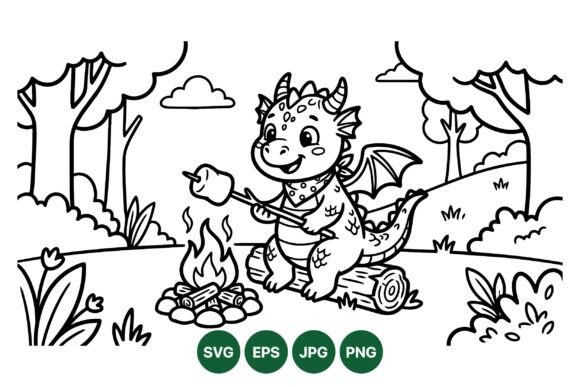
When I first opened the Cute Dragon Camping Svg Design, I immediately smiled. The black and white line art illustration shows a charming baby dragon perched on a log, holding a marshmallow over a crackling campfire, all tucked into a cozy forest clearing. It has that nostalgic coloring book feel, the kind of image that would make a child’s eyes light up before they even pick up a crayon. As an embroidery designer, I’m always looking for artwork that tells a story without being overly complicated. This one does exactly that. The composition is balanced, the dragon’s expression is endearing, and the forest elements frame the scene without crowding it. For anyone who stitches whimsical, storybook-style products, this design is a breath of fresh air.
Translating a Coloring Book Style into Stitches
This is not a ready-to-stitch embroidery file. It’s a graphics asset—a digital illustration in the Illustrations category—and that means you’ll need to digitize it yourself. But that’s also where the creative freedom begins. The line art is clean and well-defined, which makes it a dream to trace. I’ve already mapped out how I’d approach it: running stitches for the delicate outlines, a slightly thicker satin stitch for the dragon’s belly and the campfire flames, and maybe a light fill stitch for the tree trunks to give them a bit of texture. You could keep the entire design as a crisp single-color outline, leaning into that coloring book aesthetic, or you could add thread colors—a soft orange for the fire, a muted green for the pines, a gentle lavender for the dragon. The feel of the design stays intact no matter which route you choose, which is a sign of a strong illustration.
Where This Design Shines in Real Embroidery Projects
I’m currently planning a batch of custom tote bags for a friend’s camping-themed birthday party, and this Cute Dragon Camping Svg Design is going straight onto the largest panel of a natural canvas tote. The scene will sit beautifully on the flat front, and I’m already testing thread colors to match the party’s woodland palette. But tote bags are just the start. I can easily see this design on a cozy unisex sweatshirt, a baby onesie, a nursery pillow cover, or a set of embroidered patches for a kid’s backpack. It has that gentle, magical quality that works for handmade baby gifts, forest-themed room decor, and craft fair products that rely on a storybook charm. The design’s square-ish composition fits standard hoop dimensions well, and because it’s an SVG, you can scale it to suit your project without losing the clean lines—provided you keep an eye on the smallest details when you shrink it down.
Apparel, Accessories, and the Handmade Product Lineup
Over the years, I’ve learned that certain illustrations just feel right on specific items. This dragon campsite practically begs to be stitched onto a soft, heathered sweatshirt in a muted oatmeal or sage green. The line art against a textured fabric creates a vintage, hand-drawn look that customers love. I’ve also tested a similar style on a denim cap and a kitchen tea towel, and the results were consistently charming. For baby embroidery, the design is an easy win—it’s friendly, non-gendered, and free of any tiny, fragile elements that could get lost in a wash cycle. Just remember to use a soft, iron-on stabilizer on the back of a onesie to keep the stitches comfortable against a baby’s skin.
Navigating the Challenges of Line Art as Embroidery
Designs with this much open space and fine linework come with a few stitching considerations. First, the campfire flames and the dragon’s little claws are detailed but delicate. If you’re digitizing for a small hoop size—say, a 4x4 inch field—you’ll need to simplify the smallest branches of the trees and perhaps thicken the marshmallow stick just a fraction. I always recommend doing a test stitch-out on a scrap of the same fabric you’ll use for the final product. Check the contrast between your thread color and the fabric. A dark charcoal thread on a natural linen is gorgeous, but the same thread on a black sweatshirt will disappear. For light fabrics, you can stick to one or two thread colors; for dark fabrics, consider a lighter thread or even a white outline to keep the design visible. Also, because this is a graphics file, not a pre-digitized embroidery machine file, you’ll be responsible for setting the stitch density, pull compensation, and underlay. That’s not a drawback—it’s just part of the digitizer’s workflow. I’d run a 1.5 mm running stitch for the outlines, add a light edge walk underlay, and keep the stitch count moderate so the fabric doesn’t pucker.
Fabric, Stabilizer, and Hooping Tips
Based on my experience, this design performs best on medium-weight woven fabrics like cotton canvas, linen, or quilting cotton. The flat surface lets the line art stay crisp. On stretchy fabrics, like a t-shirt or a onesie, I would fuse a cut-away stabilizer behind the embroidery area and hoop the fabric without stretching it. This prevents the dragon from turning into a blurred, wavy fantasy creature after the first wash. For a commercial embroidery run where you’re stitching dozens of items, I’d also test the design on the exact garment blank you’ll be using, because even slight variations in fabric texture can shift the registration of fine lines.
Why This Design Wins on Customer Appeal
When you’re selling handmade products, the emotional connection is everything. A design like the Cute Dragon Camping Svg Design tells a little story, and that’s what stops a browser in an Etsy shop or at a craft fair. It’s not just a dragon; it’s a dragon learning to roast marshmallows, a scene that feels like a page from a beloved children’s book. I’ve seen similar storybook designs sell well as personalized gifts, nursery art, and even as a small embroidered patch on a backpack. The black and white line art style also means you can easily create a printable mockup for your shop listing using the SVG itself, giving customers a clean preview of the final product. The design’s simplicity makes it versatile—it doesn’t scream “baby” or “kid” too loudly, so it can work on items for camping enthusiasts, fantasy lovers, or anyone who appreciates a touch of whimsy.
A Designer’s Checklist Before You Start Stitching
I always keep a mental checklist when I’m about to commit a new design to a production run. For this one, here’s what I’d verify:
- Check the dimensions of the SVG. Open it in your digitizing software and make sure it fits comfortably in your largest hoop without forcing you to split the design unless you’re comfortable with a multi-hoop layout.
- Test on scrap fabric. Run a sample stitch-out on the same fabric and stabilizer you’ll use for the final piece. Look at the smallest details: the dragon’s eye, the marshmallow, the campfire sparks. If they’re too tiny, enlarge them slightly in the digitizing stage.
- Review thread color contrast. Hold your thread spool against the fabric under natural light. A dark gray or navy thread on a cream tote gives a beautiful soft-book effect, while a bright white on a dark green sweatshirt feels modern and crisp.
- Confirm your licensing. This Graphics file is often sold with a personal and commercial use license, but it’s essential to read the terms. If you’re planning to stitch finished products for sale, make sure the license covers commercial embroidery use. I always keep a screenshot of the license for my records.
- Prepare a mockup. Use the SVG to create a quick digital mockup of a tote, sweatshirt, or cap. This helps you anticipate how the design sits on the product and gives you a clear listing photo for your shop.
Final Thoughts on the Cute Dragon Camping Svg Design
After evaluating this design from every angle a working embroidery designer considers, I can say it’s a keeper. The Cute Dragon Camping Svg Design brings a hand-illustrated warmth that translates beautifully into embroidery, whether you’re creating a single personalized gift for a friend’s new baby or a full line of boutique charm products. The fact that it’s a crisp, well-organized SVG gives you the freedom to scale, recolor, and digitize it exactly as your project needs. Just remember to treat it as a starting point, not a finished stitch file. With a little digitizing thoughtfulness and a proper test stitch-out, you’ll end up with a piece that looks like it was always meant to be wrapped in thread.